

AI Music’s Loudest Week: Suno Goes Visual, Labels Dig In, Gamers Push Back
Suno launched AI music videos, the majors pulled new evidence into their lawsuit, and players caught undisclosed AI songs in a cult game. The fight is about disclosure now.
Image: Suno (Suno Visuals announcement)
AI music had one of its loudest weeks yet. Suno launched a video tool, the major labels collected new evidence in their lawsuit against it, and gamers went to war over AI songs hidden inside a cult classic. On X, every one of those stories trended, and the mood was a mix of fascination and suspicion.
Suno wants to make your video too
On November 17, Suno introduced Visuals, a feature that turns songs made on the platform into images and short video clips. Clips run up to 15 seconds, can follow a song’s structure and lip-sync to its lyrics, and can be extended and edited on a timeline. Visual credits are sold separately from song credits.
The Verge reported the tool runs on a model called H3 Move, based on H3 from Chinese AI company MiniMax. Music Business Worldwide added the awkward context: MiniMax is itself being sued by Hollywood studios, and Suno is still being sued by two of the three major labels. Suno says it added filters meant to block prompts and uploads that try to recreate specific artists, public figures or copyrighted work.
The labels are counting AI uploads
In that lawsuit, Universal and Sony told a federal court on November 16 that they were withdrawing a motion to force DistroKid to hand over material about its AI-detection tool, because the distributor had now produced the documents, MBW reported. The case against Suno continues. The labels’ angle is clear: if they can show Suno-made tracks flooding streaming services and earning royalties, they can argue AI output competes with the human recordings it learned from.
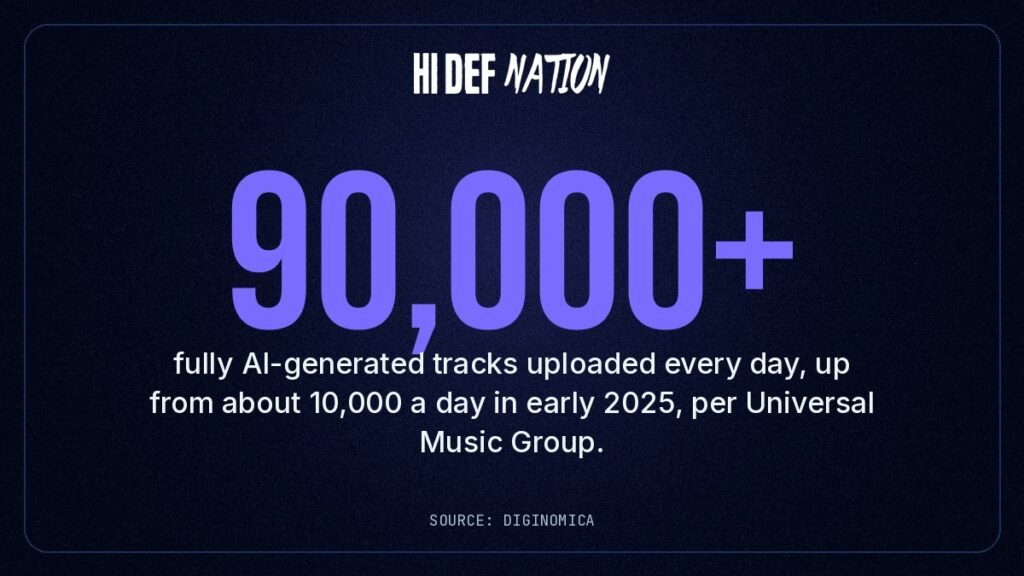
The scale is already wild. Universal CEO Lucian Grainge said the company estimates more than 90,000 fully AI-generated tracks are now uploaded every day, up from roughly 10,000 a day in early 2025, according to diginomica. Suno has also tightened its own pipeline, and its help center now lists download caps: none on the free tier, 20 a month on Pro, and 60 a month on Premier.
Gamers smelled it first
The sharpest backlash came from players, not labels. Dexerto reported that fans digging through the files of The Binding of Isaac: Repentance+ found its new GTA-themed secret run used music still tagged “made with suno.” The Steam page had no AI disclosure, and recent reviews sat at Overwhelmingly Negative, though bugs and broken mods are part of that anger too. One fan’s line summed up the mood: synthwave is one of the easiest genres to make by hand.
Our take
The tools are getting better fast. That is not the debate anymore. The real fight is about disclosure and credit. Listeners do not seem to hate AI as a concept. They hate finding out after the fact. Hidden AI feels like a betrayal, while labeled AI is just another instrument people can choose to support or skip.
For independent artists, this is the moment to lean into what a machine cannot fake: your story, your city, your live show, your community. Use AI for a mood board or a lyric video if it helps. Just be upfront about it. In a world where tens of thousands of synthetic tracks show up every day, being clearly human is a brand.
Sources: Suno, The Verge, MBW (Visuals), MBW (DistroKid), diginomica, Suno Help Center, Dexerto.