
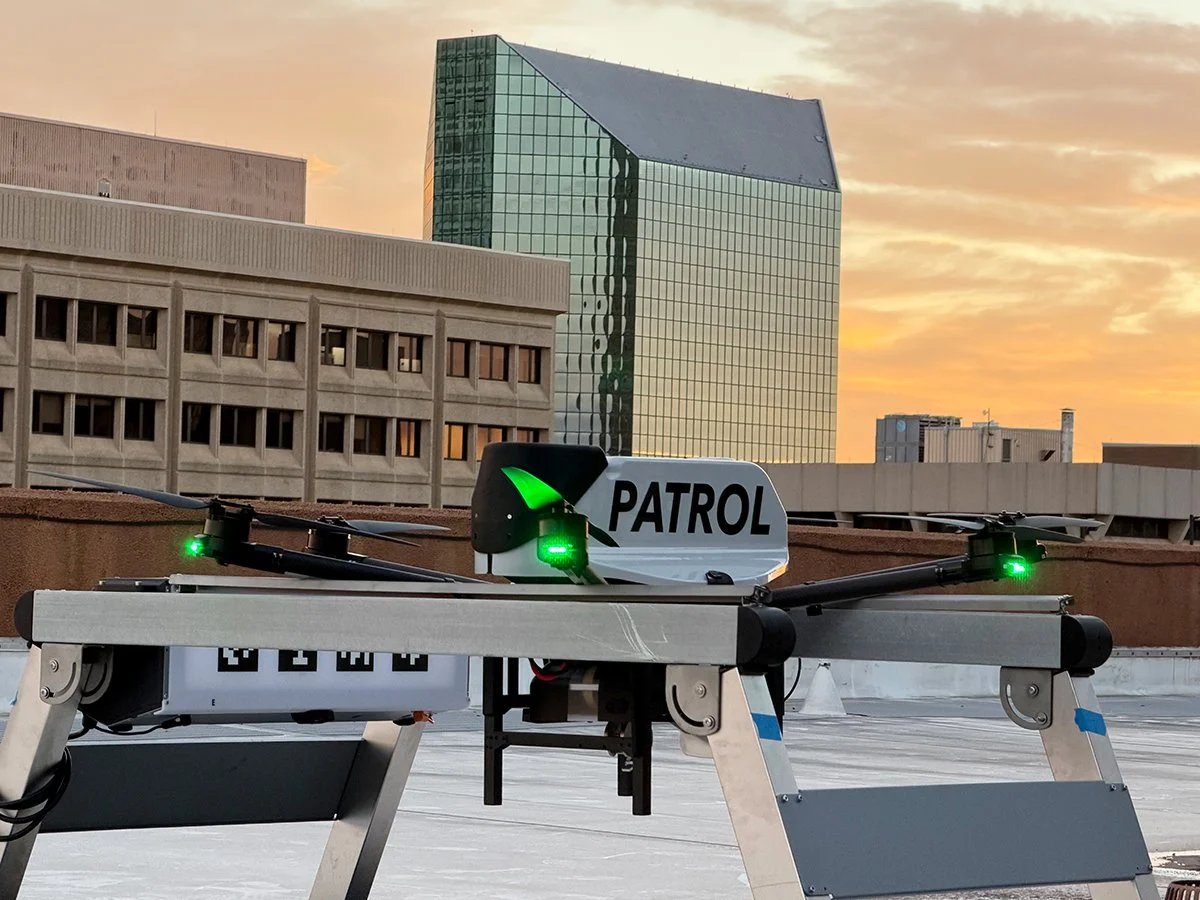
Forsyth County Launches the First U.S. A2Z AirDock Network for Emergency Drones
Three automated drone docks are expanding Forsyth County’s first-responder program. Here is what is new—and what the “first” claim actually means.
Forsyth County is expanding the way it sends drones to public-safety calls. The sheriff’s office has established what supplier A2Z Drone Delivery calls the first U.S. network of its AirDock system for public-safety use. That is a specific first for this manufacturer’s docking network—not a claim that Forsyth County invented or was first nationwide to use automated first-responder drones.
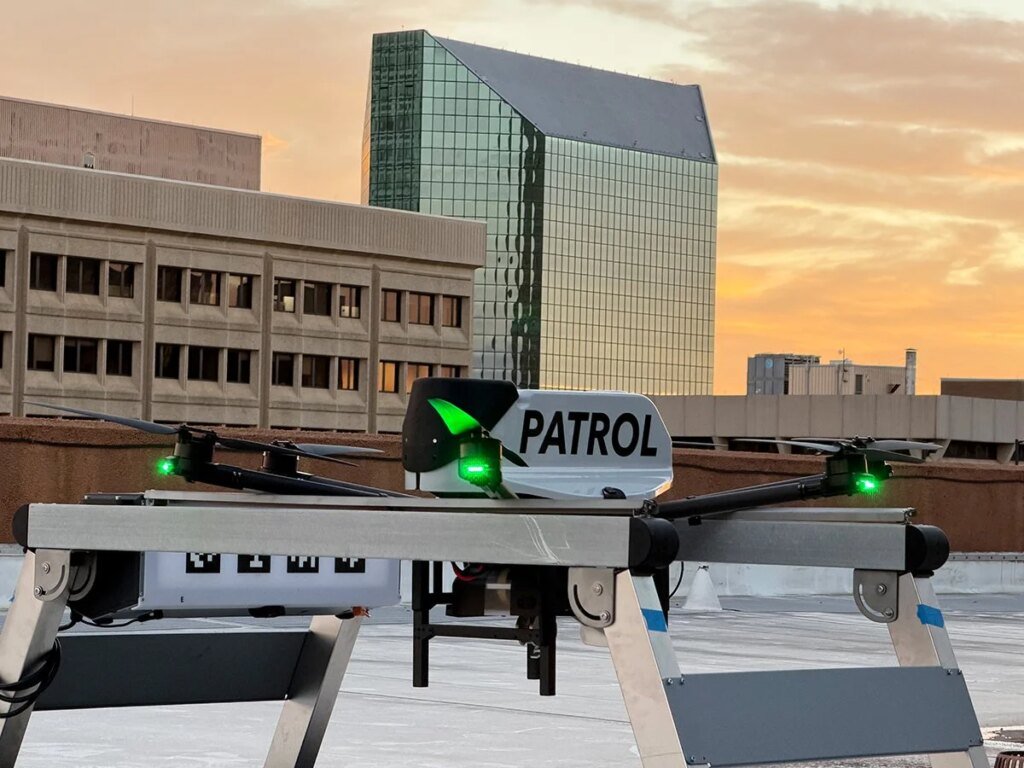
Three AirDock stations have been positioned around Winston-Salem to support a potential service area of up to 200 square miles, according to A2Z’s Forsyth County case study. The docks can launch, receive and recharge the company’s Longtail Patrol aircraft without a crew traveling to each station between missions. A2Z says the system logged more than 500 miles and 25 flight hours in its first weeks.
What the drones can do
The Longtail Patrol aircraft carry optical and thermal cameras, a light and a megaphone. Their winch can also lower equipment such as an automated external defibrillator without landing the aircraft. A2Z describes uses that include providing deputies with a view of a scene, searches in difficult terrain and emergency equipment delivery. Those are capabilities; they are not proof that every call will receive a drone or that response times have already improved.
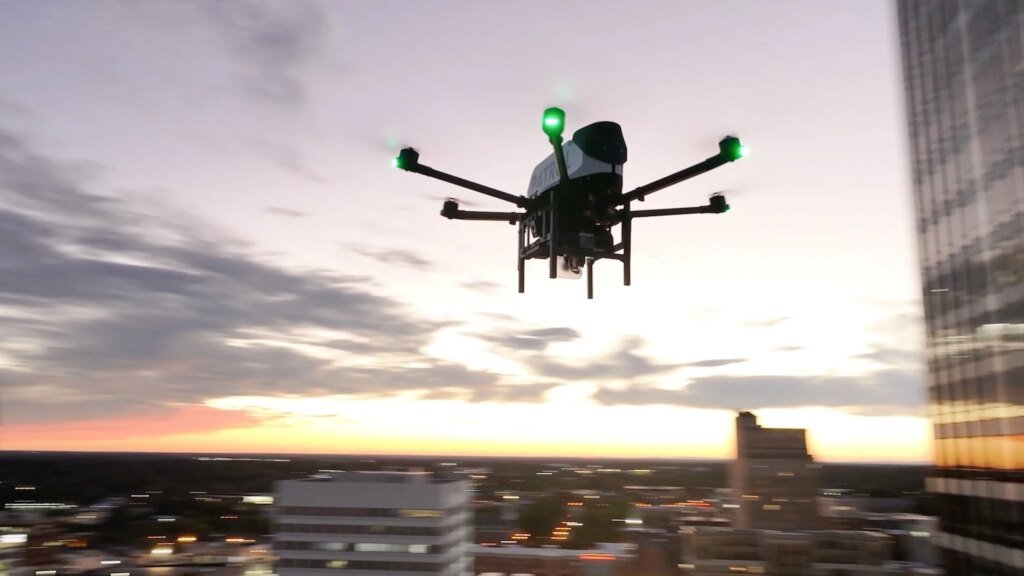
This is an expansion of an existing local program, not Forsyth County’s first encounter with drones. The Forsyth County Sheriff’s Office says its Drone as First Responder program was already operating in Clemmons and describes a deputy pilot sending live views to responders. “Automated” here refers chiefly to docking, launch, recovery and charging; it should not be read as “no human operator.”
The public questions still matter
For residents, the promise is faster information when deputies are headed to a call and another option for search-and-rescue work. The questions are just as real: Which calls qualify for a launch? How long is footage kept? How will the county report results and oversight as the network grows? Those are the details that will show whether a technically impressive system also earns public trust.
HIDEF NATION will watch the deployment as a local technology story, with its “first” claim kept in its proper scope. Read the A2Z case study and the sheriff’s drone-team overview for the source details.